
Sunday morning, coffee in hand, and Carol was standing in her garage looking at things she hadn't touched in years. A kayak she'd used twice. A workbench nobody worked at anymore. Enough space, honestly, for a small car she didn't own.
She wasn't thinking about money when she walked in there. She was just looking for a place to put the holiday decorations. But somewhere between the kayak and the workbench, a different thought showed up: this house has more in it than I've been using.
That's usually how it starts. Not a spreadsheet. Not a five-year plan. Just a Sunday, a garage, and the quiet realization that the home you've already paid for might still have something to give back.
Carol isn't alone in that garage, even if it felt that way that morning. Across the country, homeowners over 65 are the fastest-growing group turning unused space into income — the number of older homeowners advertising a spare room for rent rose sharply between 2023 and 2024, according to roommate-matching site SpareRoom, faster than any other age group. It isn't a fad. It's a quiet, practical response to a simple math problem: fixed income, rising costs, and a house that's bigger than the life currently being lived in it.
This guide is a starting point, not a to-do list. Fifteen ways homeowners over 60 have turned space, time, or a lifetime of skill into steady, manageable income — without clocking back in at a job that isn't theirs anymore.
Why This Guide Is Different
Most retirement income lists read like they were written for someone in their 30s hustling toward early retirement. Side gig apps. Crypto. "Grind now, thank yourself later." That's not what this is.
Every idea here had to pass one test before it made the list: would this fit into a life that's already full, without making it smaller? No idea here requires new debt, a skill you'd have to master from scratch, or giving up your evenings. Some pay more than others. All of them are meant to add breathing room, not create a second job you didn't ask for.
And a plain-spoken note before the list starts: not one of these fits everyone. Some need a spare room. Some need a driveway. Some need patience more than square footage. Part of choosing well is admitting, honestly, which of these actually apply to your house and your life — and letting the rest go without guilt.
The Homeowners in This Guide
Three households show up throughout this article, because real decisions look different depending on who's making them.
- Claire is a widow in her late 60s, living alone in the three-bedroom house she and her husband raised their kids in. She's cautious about strangers in her home but doesn't want to rattle around an empty house either.
- Mary and Jim are a married couple in their early 70s, both retired, adjusting to a slower pace together. They lean toward projects that don't disrupt their routines and prefer decisions they can make jointly.
- Walter is a retired mechanical engineer in his mid-60s, recently on his own after his youngest moved out. Practical to a fault, he's more comfortable with a spreadsheet and a toolbox than with a stranger's small talk.
None of them are chasing the biggest possible payday. All three are trying to answer the same quiet question Carol asked in her garage.
How to Use This Guide
Before the list, a quick framework — the same five questions worth asking about any option here:
- Startup cost. What do you need to spend before you see a dollar back?
- Privacy. Does this bring someone into your daily life, or stay at arm's length?
- Effort and schedule. Is this a weekend project or an ongoing commitment?
- Flexibility. Can you pause or stop this if your circumstances change?
- Income potential. Realistically, not optimistically, what does this bring in?
Keep these five in mind. They'll come back throughout the guide, and again in the comparison table near the end.
Retiree Blueprint Tip: Read through all 15 once without judging any of them. The idea that sounds unappealing on a first read is sometimes the one that makes the most sense once you actually check the numbers for your house.
The Four Highest-Value Opportunities
These four ideas tend to produce the most income relative to the space and effort involved — and they also carry the most to think through before starting. They get the deepest treatment here; the rest of the guide covers eleven more options in a lighter, faster format.
1. Rent Out a Spare Bedroom

This is the most direct option for most homeowners: a private room, a bit of steady income, and none of the commitment of building or converting a separate unit.
Claire's situation is the clearest example. After her husband passed, she found herself using one bedroom, one bathroom, and the kitchen — and paying to heat, cool, and maintain a house sized for four. Renting the guest room to a retired schoolteacher two towns over didn't just bring in income; it meant someone else's car in the driveway, someone else's schedule overlapping with hers, and, some weeks, someone to split a pot of soup with.
The income potential is real and well documented. According to 2024 data from SpareRoom, homeowners aged 65 and older who rent out a spare room can earn between roughly $900 and $1,600 a month, depending on the city — New York averaging the highest, and midsize metro areas like Atlanta landing closer to the lower end. For many retirees, that's enough to meaningfully offset the mean $1,787 in monthly housing costs the Bureau of Labor Statistics reports for Americans 65 and older — nearly a third of the typical retiree's spending.
The trade-off is privacy. A tenant means a person, not a transaction — someone in the hallway at 7 a.m., someone whose habits you'll learn whether you want to or not. That's exactly why screening matters more here than almost anywhere else on this list.
Is This a Good Fit? — Spare Bedroom
Good fit if: you have a private bedroom and bathroom (or are willing to share a bathroom), you're comfortable with a background check and a real interview process, and you'd genuinely welcome company most days.
Reconsider if: you value total solitude, your home's layout doesn't allow separation of shared and private spaces, or you're not in a position to enforce house rules calmly and consistently.
Retiree Blueprint Tip: Start with a 30- or 60-day trial lease instead of a full year. It protects both sides, and it gives you real information instead of a guess.
For the full breakdown — screening steps, what to charge, and how to structure a lease that protects you — see Is Renting Out a Room After Retirement Actually Worth It?
2. Convert a Basement Into a Rental Apartment
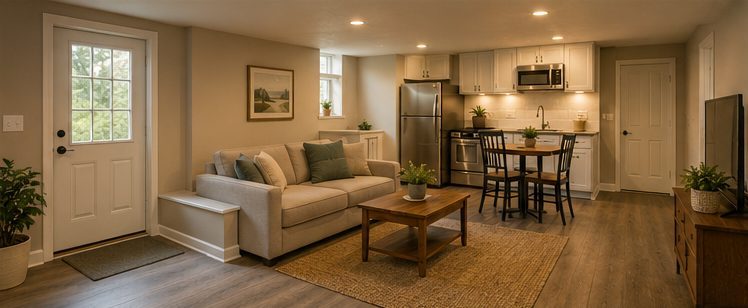
A basement apartment sits a step up in complexity from a bedroom rental — but also a meaningful step up in both income and separation.
Mary and Jim went this route after their youngest child moved out for good. Their finished basement had a separate entrance, a half-bath, and enough square footage for a modest one-bedroom setup. Adding a kitchenette and a proper door pushed the project into the low five figures, but the unit now rents for considerably more than a single room would, with almost none of the daily overlap a bedroom rental involves.
The appeal here is separation: a basement apartment with its own entrance means your tenant isn't sharing your kitchen table, your living room, or your morning routine. For a couple like Mary and Jim, who wanted income without a third person woven into their day-to-day life, that distance made the difference between "no" and "yes."
The trade-offs are real, though. Permits and inspections are more likely to apply than with a simple room rental — many municipalities require a certificate of occupancy for a basement unit, and it's worth a call to your local building department before spending a dollar on renovation. Zoning matters too; some areas restrict basement apartments to owner-occupied properties or cap the number of unrelated occupants.
Is This a Good Fit? — Basement Apartment
Good fit if: your basement already has (or can reasonably get) a separate entrance, adequate ceiling height, and natural light, and you're willing to handle a permit process.
Reconsider if: your basement floods, lacks egress windows, or the renovation cost would take many years to recover through rent.
Retiree Blueprint Tip: Call your local building department before you call a contractor. A five-minute conversation about permits can save months of rework later.
More on comparing a basement conversion against simpler options is covered in Garage, Basement, or Yard — Which Unused Space Actually Earns the Most?
3. Convert a Garage or Backyard Space Into an ADU
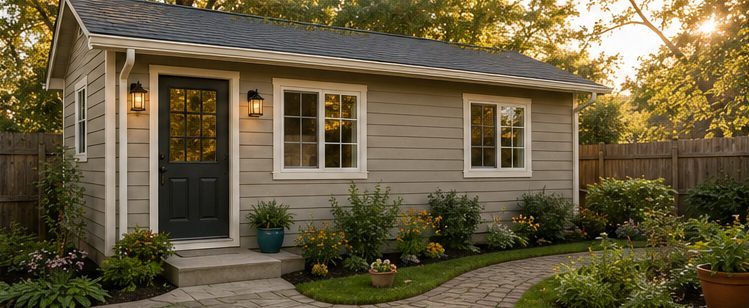
An accessory dwelling unit — a small, self-contained living space, whether it's a converted garage or a new backyard cottage — is the biggest project on this list, and often the biggest payoff.
Walter, ever the engineer, treated his garage conversion like a proper capital project. He got three contractor quotes, checked his city's ADU ordinance (many areas have loosened restrictions on these units in recent years, following state-level pushes to expand housing options for aging homeowners), and ran the numbers on rent versus renovation cost before committing. The unit now brings in income roughly comparable to a small mortgage payment — which, as it happens, is close to what the conversion itself cost to finance.
This is the idea most likely to appeal to homeowners who, according to AARP's 2024 Home and Community Preferences Survey, are increasingly interested in ADUs as a housing option — nearly half of adults over 50 surveyed said they'd consider one, often as a way to stay near family while maintaining separate space. That dual appeal — income now, a place for a family member later — is part of why ADUs draw so much attention from this age group specifically.
The honest trade-off: this is a real construction project, with a real construction timeline and real construction cost overruns. It is not a weekend job, and it is not the idea to start with if you're testing the waters on home-based income for the first time.
Is This a Good Fit? — Garage/Backyard ADU
Good fit if: you have equity or savings to fund the project without going into high-interest debt, your local zoning allows it, and you're thinking in years rather than months.
Reconsider if: you're not sure you'll stay in the home long-term, your neighborhood association restricts secondary units, or the projected rent wouldn't cover financing within a reasonable timeframe.
Retiree Blueprint Tip: Before signing any contractor agreement, ask your city planning office for their current ADU guidelines in writing. Verbal answers change; written guidelines don't.
The full comparison of ADU conversion against simpler space options — including realistic cost ranges — is in Garage, Basement, or Yard
4. Take On a Long-Term Housemate
Different from renting a room to a short-term guest, this is about finding the right person to actually live alongside, month after month — closer to a roommate than a tenant.
This is the option Claire eventually leaned toward more heavily than a rotating cast of short-term renters. After her first tenant moved out, she chose to look specifically for someone interested in a longer arrangement — not just for the income stability, but because the day-to-day company mattered more to her than she'd expected. Research backs up what she felt: AARP's home-sharing research points to reduced isolation as one of the most consistently reported benefits among older adults who take on a housemate, alongside the financial upside.
The financial case is strong when it works. One widow interviewed by AARP earned roughly $120,000 over a decade renting her home's second bedroom to a rotating series of graduate students and visiting professionals — an extreme example, but a real one, and a reminder of what consistency over time can add up to.
The risk is the flip side of the reward: a housemate who doesn't work out is a much bigger disruption than a short-term guest who doesn't work out. This is the idea, more than any other on this list, where the screening process is the product — not an afterthought to it.
Is This a Good Fit? — Long-Term Housemate
Good fit if: you're looking for company as much as income, you're willing to invest real time in finding the right match, and you can have direct conversations about house rules and boundaries.
Reconsider if: you're only interested in the income and would resent the social dimension, or a previous bad experience with a tenant has left you unable to trust the process.
Retiree Blueprint Tip: Treat the first month like an extended interview, not a done deal. A written 30-day trial period, agreed to in writing before move-in, gives both sides a graceful way out if it isn't working.
The screening approach, trial-period language, and the questions worth asking before anyone moves in are covered in A Tourist or a Tenant — Which Kind of Guest Is Actually Right for Your Spare Room?
11 More Ways to Turn Space, Time, or Skill Into Income
These options generally involve less upfront cost or disruption than the four above. Several are covered in more depth in their own Retiree Blueprint articles; the rest are previewed here and will get full treatment as this guide expands.
5. Rent out unused storage space.
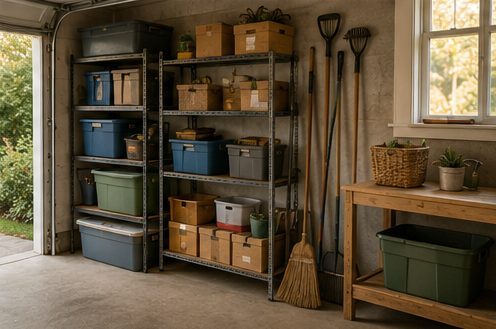
A closet, a shed, an empty corner of the basement — modest income for almost no effort, and no one living in your home. Apps like Neighbor and Store At My House connect homeowners with people who need storage nearby. Covered as one of the lower-effort comparisons in Garage, Basement, or Yard
6. Take on seasonal or part-time work.
Not everyone wants a tenant, and that's fine. Seasonal retail, tax season prep, tour guiding, event staffing — real numbers on what these actually pay after taxes, and how they compare to home-based income, are in Part-Time Work or Home Income — How Do They Actually Compare? One important distinction worth flagging here: wages from part-time work count against the Social Security earnings limit if you're collecting benefits before full retirement age; passive income from renting a room or space generally doesn't. More on that in the FAQ below.
7. Rent out driveway or parking space.
If you live near a stadium, hospital, university, or downtown core, an unused driveway or parking pad can bring in a surprising amount with zero ongoing effort — often the single lowest-effort idea on this entire list. Apps like SpotHero and Neighbor list private parking spaces by the month or by the event.
Retiree Blueprint Tip: Check with your homeowner's insurance before listing a parking space. Most policies don't need adjustment for this, but it's a five-minute call worth making.
8. Downsize strategically.
Not every income idea involves earning more — some involve keeping more of what you already have. Moving to a smaller home, paying off the mortgage entirely, and investing what's left over can quietly outperform any side income, without adding a single task to your week. That said, this isn't a decision to rush: AARP's research finds 75% of adults 50 and older strongly prefer to stay in their current home, and roughly a third of baby boomer homeowners in a recent Redfin survey said they never plan to sell. Downsizing works best as a deliberate financial decision, not a reaction to a hard month.
Retiree Blueprint Tip: If staying in the home matters more to you than the money, look at the other 14 ideas before this one. Downsizing is worth exploring, but it shouldn't be the default just because it's the most talked-about option.
9. Pet sit or offer doggy daycare from home.
For animal lovers, this is close to income without the feeling of work. Platforms like Rover and Wag connect retirees with local pet owners, and most sitters set their own schedule and rates — no renovation, no stranger sleeping down the hall. Mary tried this for a season after Jim suggested it half-jokingly, and found weekend dog-sitting fit naturally around their existing routine without displacing anything they cared about.
Is This a Good Fit? — Pet Sitting
Good fit if: you already enjoy animals, have a securely fenced yard or comfortable indoor space, and want flexible, occasional income rather than a fixed schedule.
Reconsider if: you travel frequently, have allergies or mobility limitations that make active pets difficult, or you'd rather not have your routine interrupted by someone else's dog.
10. Help with childcare or grandparent care.
Whether it's your own grandchildren or a neighborhood family that needs reliable, trusted care, this is one of the few options that pays and fills the day with connection rather than solitude — a real advantage for retirees who miss the structure of a workplace.
11. Sell unused household items.
Furniture, tools, collectibles, sporting equipment — most homes have real money sitting in closets and garages. Facebook Marketplace and local estate sale services make this close to a weekend project, not a business. Carol, in fact, sold that kayak from her garage the same month she rented out the storage corner — a small, one-time boost that cost her nothing but an afternoon.
12. Offer freelance consulting in your former field.
Decades of professional experience don't expire the day you retire. Many former managers, accountants, engineers, and teachers pick up occasional consulting work — a few hours a month, at rates that reflect real expertise, on a schedule they control. Walter, unsurprisingly, does a handful of paid engineering consultations a year for a former employer — a few thousand dollars annually for work he'd do for free if asked as a favor.
Retiree Blueprint Tip: Set an hourly rate before the first phone call, not during it. Deciding your worth in the moment, under a bit of social pressure, tends to leave money on the table.
13. Teach or tutor.
Academic tutoring, music lessons, a language you speak, a skill you spent a career mastering — there's steady local demand, and it can be done from your own dining room table. Local school bulletin boards, community centers, and platforms like Wyzant or Care.com are all reasonable starting points for finding students.
14. Offer companion or caregiving services.
For retirees with patience and a caring nature, this can mean spending time with an older neighbor who needs company, help with errands, or occasional respite care for a family caregiver. It pays modestly but reliably, and it's work many people find genuinely meaningful. This is worth approaching thoughtfully — caregiving, even informal companion care, benefits from at least a basic understanding of what the person you're helping actually needs, and from clear boundaries around what you are and aren't able to provide.
15. Start a small home-based business — or rent out equipment you already own.
Baking, crafts, woodworking, sewing, landscaping consultation — if you already have a hobby people compliment you on, there may be a small, low-pressure business hiding inside it. Or skip the business entirely and rent the equipment itself: apps like Fat Llama let you lend out a pressure washer, a table saw, or a good trailer to neighbors who need it for a weekend, with no ongoing commitment on your part.
Retiree Blueprint Tip: If a hobby-turned-business idea appeals to you, start by selling to people you already know before opening it up publicly. It's a lower-pressure way to find out whether you enjoy the business side as much as the hobby itself.
What This Looks Like in Real Numbers
Abstract comparisons only go so far, so here's how three of these ideas played out for the households in this guide — not as a promise of what anyone else would earn, but as a sense of scale.
- Claire's spare bedroom: roughly $1,050 a month from a long-term tenant in a midsize metro area, against essentially no startup cost beyond a fresh coat of paint and new bedding — a figure that falls squarely within the $900–$1,600 range reported by SpareRoom for retiree room rentals nationally.
- Mary and Jim's basement apartment: about $14,000 spent adding a kitchenette, a second exit, and required fire-safety updates, recovered within roughly two and a half years at their local market rent — after that, it's ongoing income with no further cost beyond routine maintenance.
- Walter's garage ADU: a larger project, financed partly through a home equity line, with monthly rent that comfortably covers the financing payment and leaves a modest surplus — the kind of arrangement that pays for itself over time rather than producing quick cash.
- Carol's storage corner: under $200 total to clear and slightly organize the space, bringing in a modest but entirely passive amount each month with zero ongoing effort.
None of these numbers are a guarantee. Local rents, renovation costs, and demand vary enormously by city and neighborhood. What they do show is the real range this guide is built around: some ideas here are a weekend project, and some are a multi-year commitment — and both kinds have a legitimate place on this list.
Comparing All 15 at a Glance

| Idea | Startup Cost | Privacy Impact | Effort | Flexibility | Income Potential |
|---|---|---|---|---|---|
| Spare bedroom | Low | High | Medium | Medium | Medium–High |
| Basement apartment | High | Medium | High | Low | High |
| Garage/backyard ADU | Very High | Low | High | Low | High |
| Long-term housemate | Low | High | Medium | Medium | Medium–High |
| Storage space | Very Low | None | Low | High | Low |
| Seasonal/part-time work | None | None | High | Medium | Medium |
| Driveway/parking | Very Low | None | Very Low | High | Low |
| Downsizing | N/A (frees capital) | Medium | High (one-time) | Low | High (one-time) |
| Pet sitting | Very Low | None | Medium | High | Low–Medium |
| Childcare/grandparent care | Very Low | None | High | Medium | Medium |
| Selling household items | None | None | Low | High | Low (one-time) |
| Freelance consulting | None | None | Low–Medium | High | Medium |
| Tutoring/teaching | Very Low | Low | Medium | High | Low–Medium |
| Companion/caregiving | Very Low | None | Medium | Medium | Low–Medium |
| Home business/equipment rental | Low–Medium | Low | Medium | High | Low–Medium |
Reading this table isn't about finding the "best" row — it's about finding the row that doesn't ask you to give up something you're not willing to give up.
A Simple Planning Worksheet
Before committing to anything on this list, walk through your own house with fresh eyes and answer these honestly:
- What space in my home is genuinely unused — not "could be," but actually sitting empty right now?
- What skill or knowledge do people already ask me for help with?
- How many hours a week am I honestly willing to give to this?
- What would make this feel like a burden instead of a bonus?
- What's one small, low-risk way to test this idea before committing further?
Decision Checkpoints
Once an idea makes it past the worksheet, three checkpoints are worth clearing before you spend a dollar:
- Checkpoint 1 — Legal and insurance. A phone call to your homeowner's insurance provider and, if relevant, your local zoning or building department. This applies most to renting space (rooms, basements, ADUs, parking) and less to service-based ideas (pet sitting, tutoring, consulting).
- Checkpoint 2 — A trial period. Wherever possible, structure the first commitment as something reversible — a 30-day lease instead of a year, a single weekend of pet sitting before a regular client, one paid consulting call before a retainer.
- Checkpoint 3 — An honest number. Write down, on paper, what this idea would need to earn to feel worthwhile, and compare it to the realistic ranges in this guide. If the numbers don't support the effort, it's fine to let the idea go.
Answering the worksheet questions and clearing these checkpoints will usually narrow fifteen ideas down to two or three worth a closer look.

Common Questions
Do I need to report this income?
In most cases, yes — rental income, freelance income, and business income are all generally taxable. This isn't tax advice, and a quick conversation with a tax preparer before you start is worth the cost.
Will this affect my Social Security?
It depends on the source. For 2026, the Social Security Administration's earnings limit for beneficiaries below full retirement age is $24,480 a year — benefits are reduced $1 for every $2 earned above that amount. In the year you reach full retirement age, the limit rises to $65,160, with a gentler $1-for-$3 reduction, and it disappears entirely once you reach full retirement age. Critically, this earnings test applies to wages and self-employment income — things like part-time work, consulting, or tutoring — not to passive rental income from a spare room, basement apartment, or ADU. We cover the wage-versus-passive-income distinction in more detail in Part-Time Work or Home Income
Do I need insurance or a permit?
Often, yes, for anything involving a tenant, a business operating from your home, or a physical renovation like an ADU or basement conversion. Check with your homeowner's insurance provider and local zoning office before you commit — this is a short phone call that can save a serious headache later.
What if I try something and it doesn't work?
Then you stop. None of these ideas require a long-term contract or an irreversible decision if you start small and test before you scale. The trial-period approach recommended throughout this guide exists specifically for this reason.
Is it safe to have a stranger living in my home?
It can be, with the right screening process — a real application, a background check, references you actually call, and a written agreement. Claire's approach, and the one recommended throughout Retiree Blueprint's articles, is to treat this as seriously as a small business would: no shortcuts on screening, regardless of how a candidate presents in a first conversation.
How do I know what to charge?
For room and space rentals, check local listings on sites like SpareRoom, Neighbor, or Craigslist for comparable spaces in your area — city-specific averages are more reliable than any national number. For services like tutoring, pet sitting, or consulting, platform-listed rates (Rover, Wag, Care.com) give a realistic local benchmark.
Will renting out space change my property taxes?
In most areas, no — unless the change involves a permitted structural addition, like a full ADU, which can sometimes trigger a reassessment. This varies significantly by state and county, so it's worth a quick call to your local assessor's office before a major renovation.
What's the single biggest mistake homeowners make with these ideas?
Skipping the trial period. Nearly every regret shared with Retiree Blueprint traces back to signing a full-year lease, taking on a large renovation loan, or committing to a recurring client before testing the arrangement on a smaller scale first.
Can I do more than one of these at the same time?
Yes, and many homeowners eventually do — Carol's storage rental and occasional item sales run alongside each other with no conflict, since neither takes any real ongoing time. The main thing to watch for is stacking anything that involves people in your home (a tenant plus regular pet-sitting clients, for instance) until you're confident you can manage the combined schedule and privacy trade-off.
How much of this counts as "self-employment" for tax purposes?
Consulting, tutoring, pet sitting, caregiving, and a home-based business generally count as self-employment income and may involve self-employment tax in addition to income tax. Straightforward room or space rental is usually treated as rental income instead, with different rules. The distinction matters enough that it's worth a real conversation with a tax preparer before your first tax season with any new income source, not an assumption either way.
What if my adult children are worried about me doing this?
It's a common reaction, and usually comes from care rather than doubt in your judgment. Bringing them into the decision — showing them the screening process, the trial-period plan, and the numbers behind the choice — tends to turn worry into support faster than reassurance alone does.
Choosing the Right Opportunity for You
There's no ranking here on purpose. The homeowner with a spare bedroom and the homeowner with a workshop full of tools aren't looking for the same answer, and a list that pretended otherwise wouldn't be honest.
What tends to work best is picking the one or two ideas that fit the life already being lived — not the one that sounds most impressive, and not the one promising the highest number. Claire chose company over convenience. Mary and Jim chose separation over intimacy. Walter chose a bigger project because he had the patience and the capital for it. None of them chose wrong; they chose for themselves.
Start there. See how it feels for a month. Adjust from what's actually learned, not from what was guessed at the start.
Final Thoughts
Carol never did find a place for the holiday decorations that Sunday morning. She found something else instead — a question worth sitting with for a few weeks before she acted on it.
What she landed on, eventually, was smaller than she expected: a cleared-out corner of the garage, rented by the month to a neighbor who needed extra storage for a home renovation. No stranger in the house. No construction loan. Just an honest look at what she actually had, matched to what she actually wanted her retirement to feel like.
That's the real point of this guide. None of this is about needing more money to survive. For most homeowners reading this, it's about wanting a little more breathing room — a cushion, a bit of flexibility, the option to say yes to a grandchild's visit or a doctor's recommendation without doing math first.
Retirement income, done well, should make life feel less tight, not more complicated. Whichever idea makes sense from this list, the right reason to choose it is that it fits — not that it pays the most.
One next step: pick the single idea from this list that felt easiest to imagine while reading it, and give it thirty days as a small, low-stakes test before deciding anything further.
Disclaimer: This article is for general informational purposes and isn't tax, legal, or financial advice. Rules around rental income, Social Security, insurance, and local zoning vary by location and change over time — check with a qualified professional and your local government before making decisions based on anything in this guide.
More From Retiree Blueprint
- Is Renting Out a Room After Retirement Actually Worth It? — the full spare bedroom guide
- Garage, Basement, or Yard — Which Unused Space Actually Earns the Most? — basement, ADU, storage, and parking compared
- A Tourist or a Tenant — Which Kind of Guest Is Actually Right for Your Spare Room? — screening a long-term housemate
- Part-Time Work or Home Income — How Do They Actually Compare? — seasonal work and the Social Security earnings limit
- The Get-Ahead Strategy That Boosts Your Social Security Check for Life — related Social Security context
- The Paycheck After 60 book series — the deeper, narrative version of these ideas through Claire's and Mary & Jim's stories