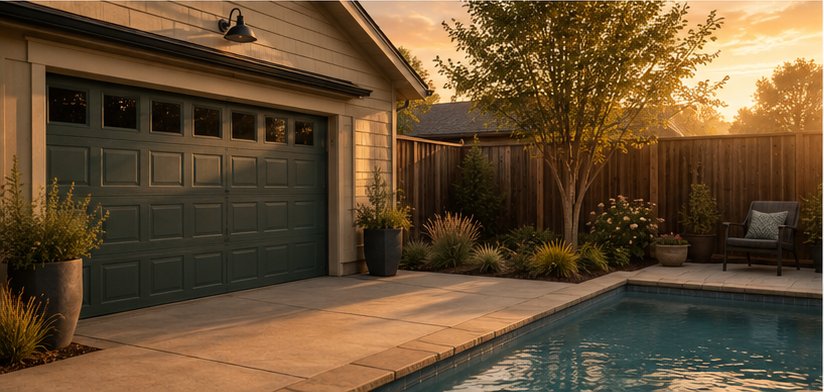
There's a specific moment a lot of retirees describe: standing in the garage, looking at a corner that's held the same three boxes since a move a decade ago, thinking, someone would probably pay for this space. Then walking back inside without doing anything about it, because it's not obvious where to even start, or whether it's worth the trouble.
It usually is worth a look — but which space earns the most depends less on the space itself and more on what's actually in demand nearby. This general practice — using existing space in a home you already own to generate income — is sometimes called "house hacking," though the term is really just a label for something retirees have quietly been doing for years. A garage in a dense city with no storage units for miles behaves completely differently than the same garage in a small town where everyone already has their own. A few honest, general patterns, in order from lowest-effort to highest-involvement:
Garage or basement storage
This tends to be the calmest option of the five, and often the easiest to start. People are looking for space to store belongings, RVs, boats, or seasonal items, usually at a lower monthly cost than a commercial storage facility — which is exactly why it appeals to them, and why it works for you. Once someone's settled in, the ongoing involvement is close to nothing: no daily interaction, no shared walls, just a key exchange and a check.
The honest downside: it's also usually the lowest-earning of the five, dollar for dollar. What it lacks in income, it makes up for in how little it changes your day-to-day life.
A fenced yard
If your yard is fenced, there's real demand from dog owners looking for private space to let a dog run off-leash by the hour — through apps built specifically for this. No ongoing commitment, no one storing anything long-term, just short visits that come and go without you needing to be involved beyond unlocking a gate.
It won't replace a mortgage payment, but it's close to the lowest-friction option here, and it's one people tend to underestimate simply because it doesn't look like "real" income until the first few payments show up.
A pool
Seasonal, and entirely dependent on climate and neighborhood — but often the highest earning potential per hour of any option here, through the same kind of hourly-rental apps used for yards. A pool that sits unused most weekdays can bring in a meaningful amount over a single summer, concentrated into a few months rather than spread evenly across the year.
The trade-off is exactly what you'd expect: liability, a bit more wear, and the reality that someone else is genuinely in your backyard, even if only for an afternoon.
A spare room
Usually the highest and steadiest monthly amount of the original four — but also the one with the most day-to-day involvement, since it means sharing a home with someone rather than sharing a space occasionally. This is covered in more depth in "Is renting out a room after retirement actually worth it?" elsewhere on this site, since it deserves its own honest look rather than a paragraph here.
A garage apartment or ADU
If your garage or backyard has (or could have) its own separate entrance, you're in different territory entirely — what's often called an ADU, short for "accessory dwelling unit." A converted garage apartment or backyard cottage can bring in rent closer to a small separate home than a single room, with the benefit of a real physical wall between your daily life and your tenant's. It's also the most expensive of these options to set up, since it usually means actual construction or renovation rather than just clearing out storage. Worth a look if you're already picturing more privacy than a shared-hallway room would give you.
What people actually tend to do
None of these are mutually exclusive, and most people don't pick just one. A common pattern: storage in the garage first, since it's the lowest-risk way to test whether this kind of income is worth the effort at all, and a room or a yard added later once the first arrangement proves it's manageable. Starting small isn't a lesser option — for a lot of people, it's the whole reason the bigger step ever happens.
One thing worth admitting plainly: none of these fit every home, every neighborhood, or every temperament. A pool that's perfect for a family three doors down might sit unused because your street simply doesn't have the foot traffic. That's not a failure of the idea — it's just information, and it's better to have it before spending a weekend cleaning out a garage than after.
A quick way to estimate your own numbers
Before assuming any of these figures apply to you, spend twenty minutes on the actual apps and sites people use for each — a storage marketplace, a dog-yard rental app, a pool-rental app, or a room-listing platform — and search your own zip code specifically. Look at what similar spaces nearby are actually charging, not what a national article says the average is. Your own street tells you more than any average ever could.
What people wish they'd known beforehand
Two things come up again and again in conversations about this: check your city or HOA rules before you list anything, since some areas restrict short-term rentals of storage or outdoor space in ways that surprise people. And take photos of the space before anyone starts using it — not out of suspicion, just so there's a plain, dated record of its condition if a question ever comes up later.
If you're not sure which of these fits your situation, start with whichever one requires the least involvement from you right now — for most people, that's garage or basement storage — and treat the first month as information-gathering rather than a commitment. What you learn from that first, low-effort try is usually what tells you whether it's worth doing more, and whether it's worth adding a second option down the road.